
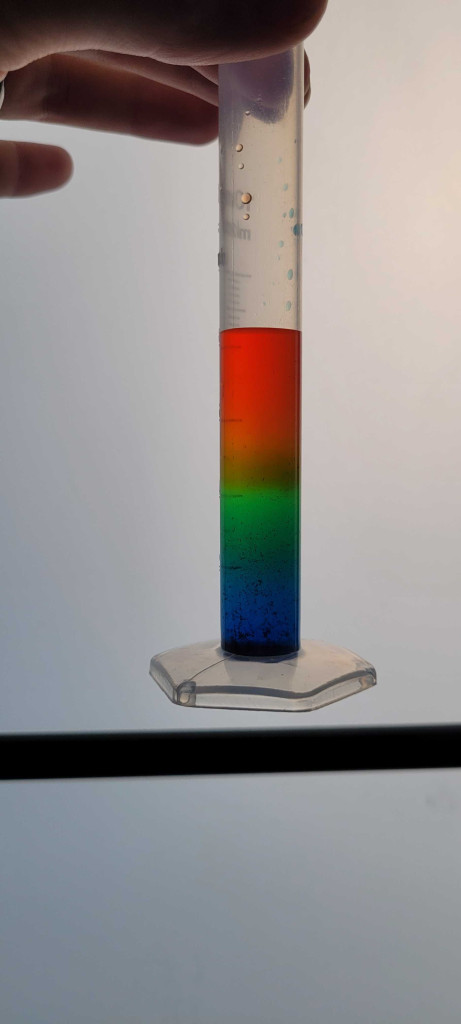
For the past few weeks AF has spent some time with one simple question:
How can this picture be recreated?
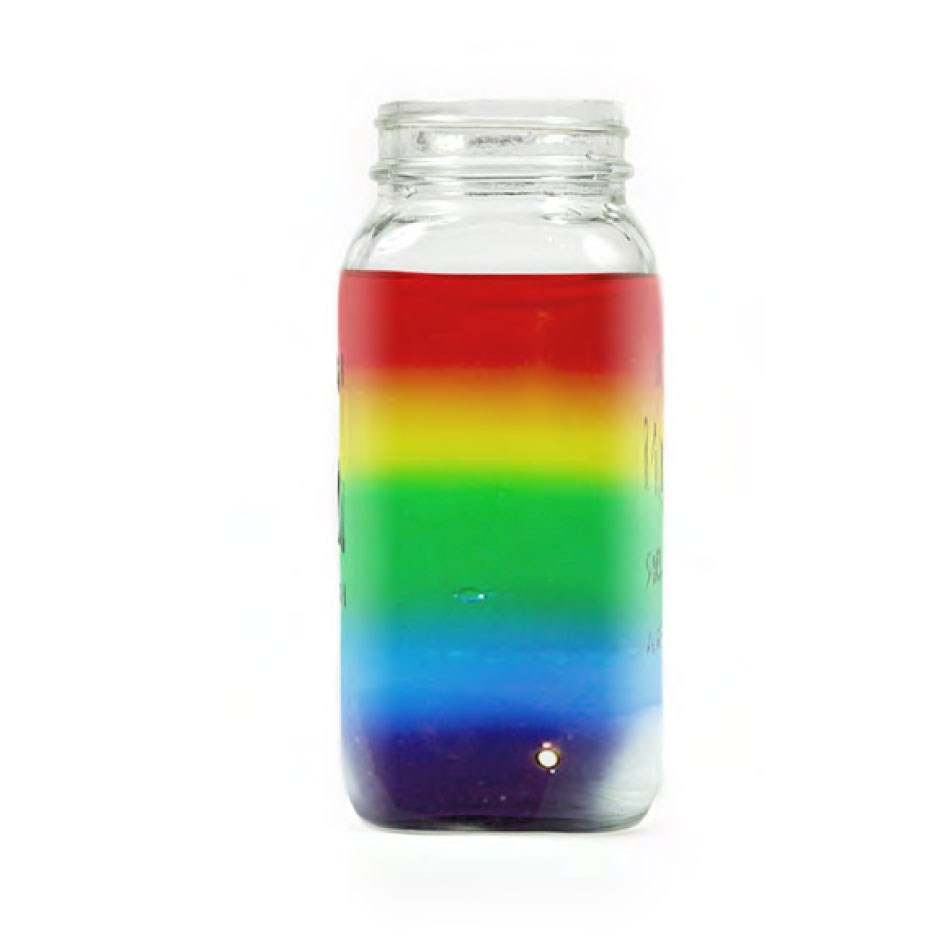
But rather than simply looking it up his task was to use his previous knowledge to hypothesize, plan and test his ideas to find a way.
STEP 1: Brainstorming & Research
Initially, AF was unsure. He had no idea how this could work! But by using his prior knowledge of chemistry he quickly realised that maybe there were some things he could try…
STEP 2: Hypothesis
A hypothesis is a testable statement about what we believe will happen in an experiment. The first hypothesis AF formed was that different liquids would create separate layers due to their difference in density. And this we would be able to test in a simple experiment!
STEP 3: Experiment 1
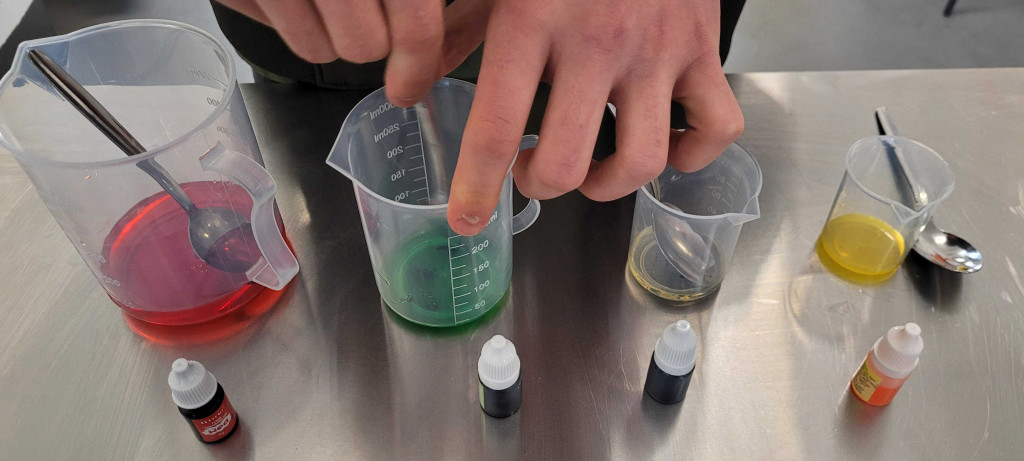
To test his first hypothesis AF planned a short experiment:
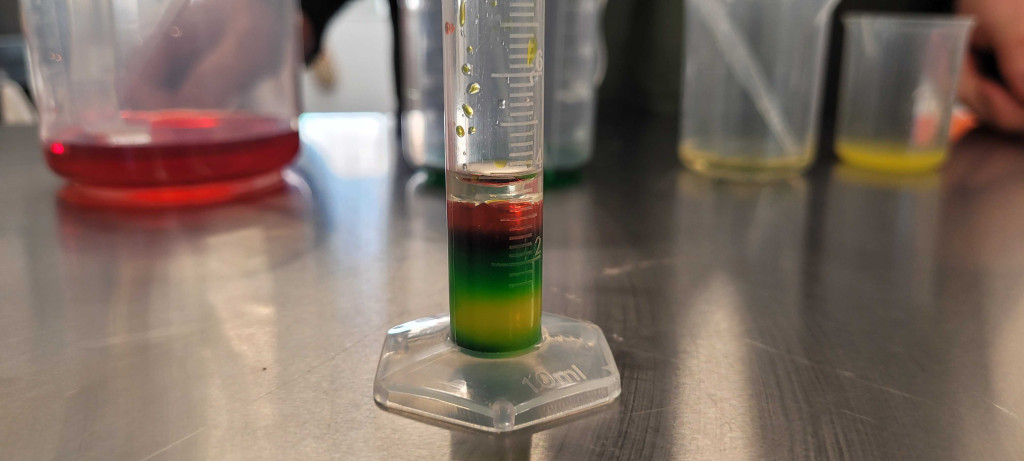
- Combine lemon juice, vinegar, oil and water with different colours of food colouring (note which is which)
- Use a pipette to carefully add them to a test tube one at a time
- Observe
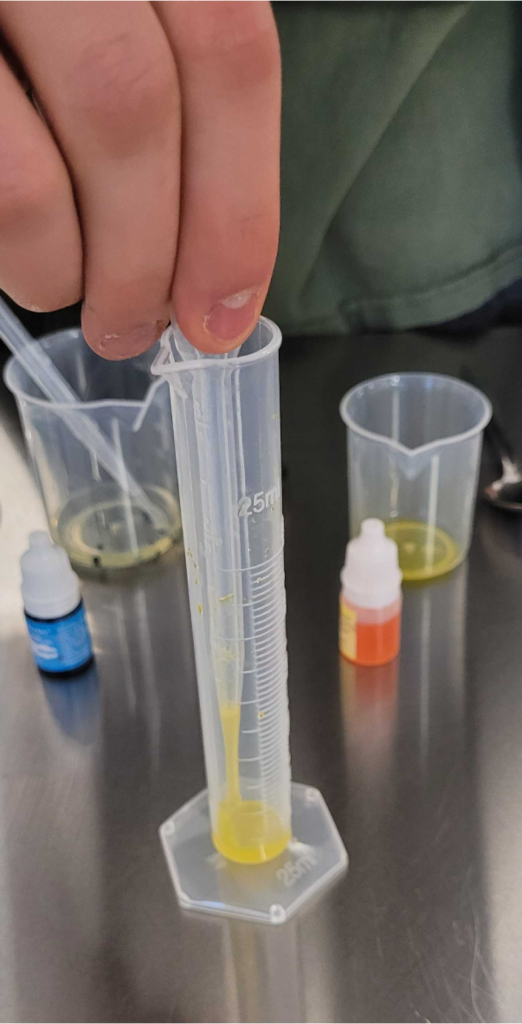
STEP 4: Evaluate & Revise
After carrying out the experiment AF concluded that the liquids did indeed create separate layers and he was able to determine that lemon juice is the densest, followed by vinegar, water and oil.
While it worked, he wasn’t quite happy with it, as it didn’t create the desired gradient and it just wasn’t enough colours. So he took what he had just discovered and devised a new hypothesis:
Using different concentrations of vinegar and water solution mixed with food colouring will create distinct layers with pure vinegar at the bottom and pure water at the top.
STEP 5: Experiment 2
To test his new hypothesis AF carried out a follow up experiment:
- Create 6 coloured liquids:
- 100% vinegar + purple
- 80% vinegar & 20% water + blue
- 60% vinegar & 40% water + green
- 40% vinegar & 60% water + yellow
- 20%vinegar & 80% water + orange
- 100% water + red
- Carefully add them to a test tube with a pipette in order from most to least vinegar
- Observe!
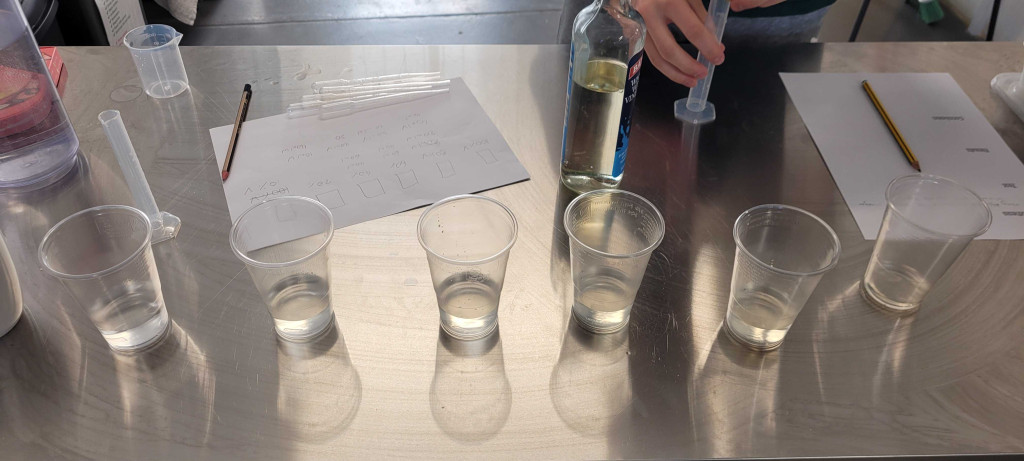
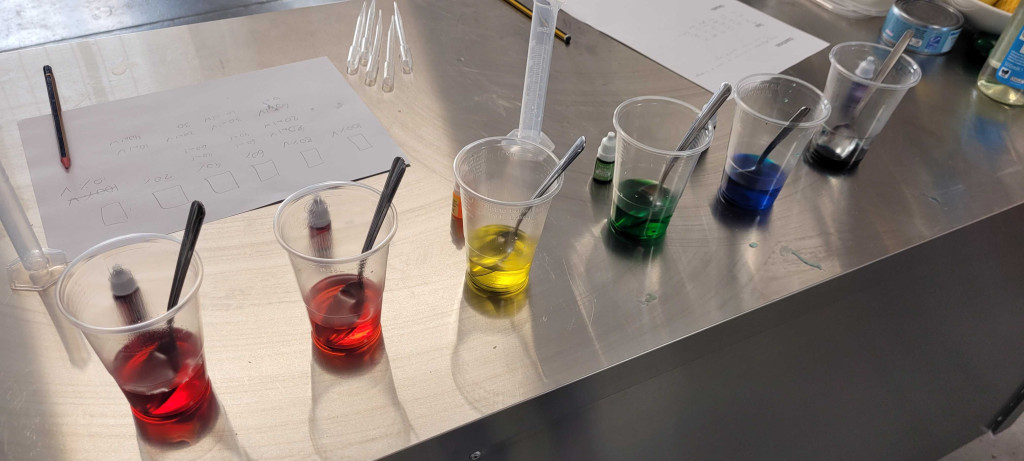
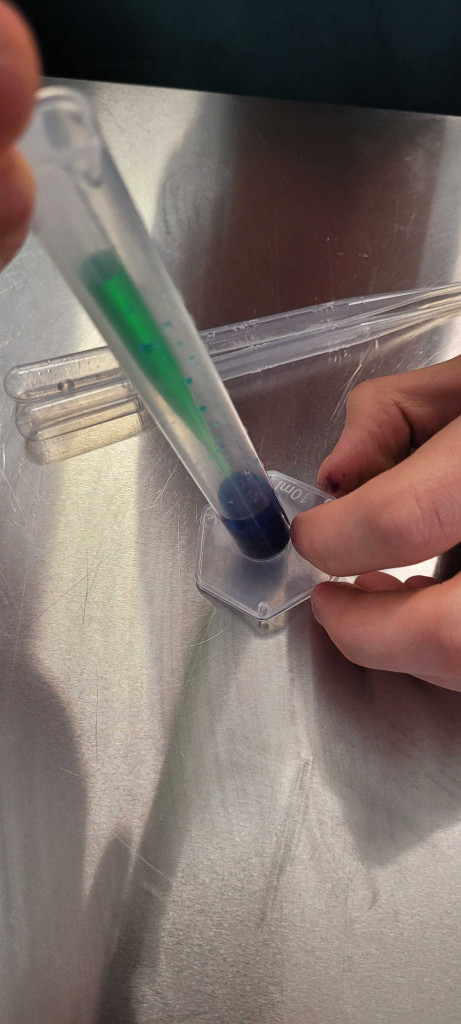
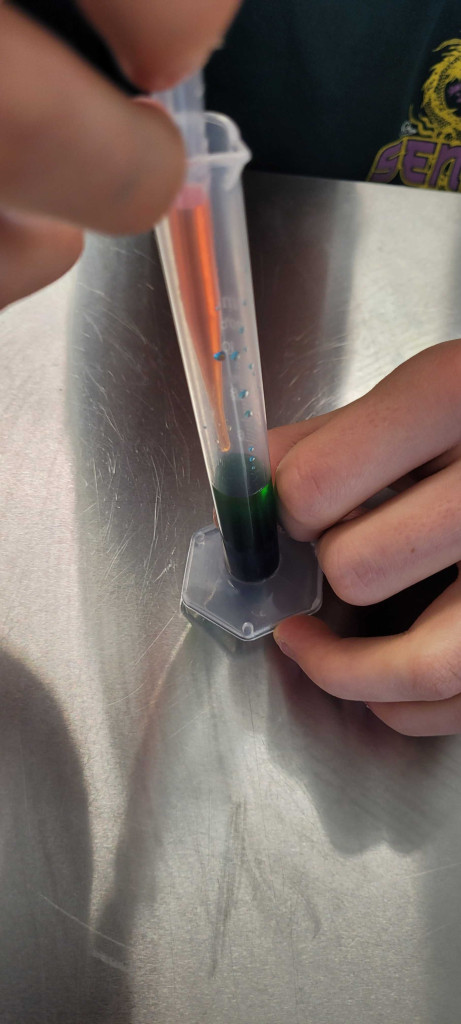
If his hypothesis was correct, he would then be able to see separate layers, in rainbow order, just like the target picture and well…. see for yourself!
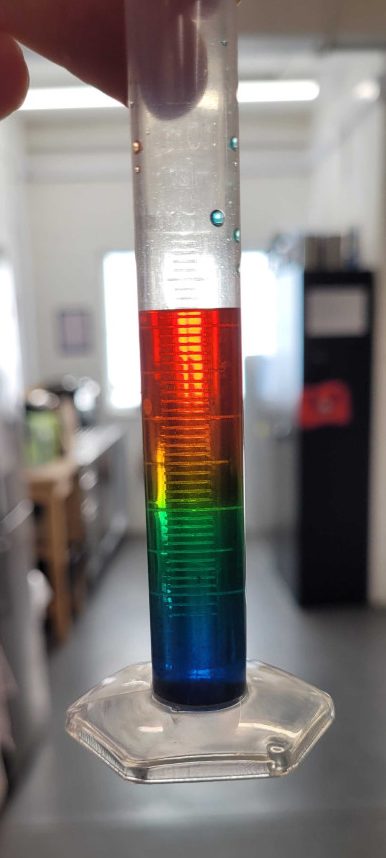
STEP 6: Conclusion
After lots of trial and error, forming and testing hypotheses AF was able to conclude that one possible way to create a liquid rainbow in a jar is by using vinegar and water solutions with different concentrations. When added carefully to a test tube this creates separate layers, because the solutions have slightly different densities.